
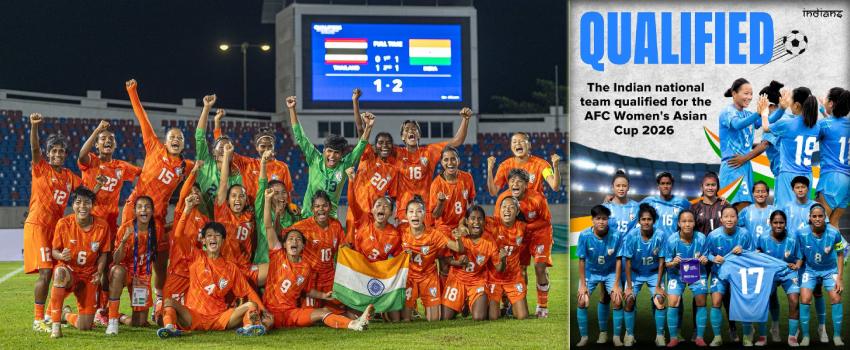
Indian football, especially on the women’s side, has always felt like a journey of small steps, often against a strong headwind. We see flashes of brilliance, moments of hope, then… well, sometimes it feels like we’re back to square one. But then comes news that genuinely makes you sit up, take notice, and feel a surge of something real: India is set to host the AFC Women’s Asian Cup 2026.
Now, this isn’t just another tournament announcement. Oh no. This is a monumental moment. It means our national team, the Blue Tigresses, gets automatic qualification. Forget the grueling qualifiers, the nail-biting finishes. They’re in. So, why is this more than just a free pass? Why is India’s entry into AFC Women’s Asian Cup 2026 a major breakthrough? Let’s unpack the layers, because this feels different. This feels big.


The Long Road: Indian Women’s Football – A Brief History
To truly grasp the significance of 2026, we need a quick look back. Indian women’s football has a proud, if often overlooked, history. We actually finished runners-up in the AFC Women’s Asian Cup way back in 1979! Imagine that. But since then, it’s been a tough climb.
For decades, the women’s game here has battled a serious lack of funding, minimal infrastructure, and, frankly, a general apathy from many corners. Players often trained on patchy fields, without proper support or recognition. It’s been a constant uphill battle for these incredible athletes. They’ve shown grit, no doubt, but the system hasn’t always matched their passion.
We did host the tournament in 2022, which was a huge moment, but the team’s performance was unfortunately cut short by a COVID-19 outbreak in the camp. It was heartbreaking, a real gut punch after all that preparation. So, 2026 isn’t just a repeat; it’s a chance to truly deliver on that promise.
The “Automatic Qualification” Game Changer: Why It’s HUGE
Okay, so India gets automatic entry as hosts. Sounds simple, right? But this isn’t just a convenient shortcut; it’s a profound strategic advantage.
No Qualifiers? That’s a Blessing in Disguise
Think about it: no grueling, high-pressure qualification matches. Those games are brutal. They demand peak performance, often with minimal preparation time. Now, the Blue Tigresses can focus entirely on long-term development. They can experiment with tactics, integrate new talent, and build cohesion without the immediate sword of elimination hanging over their heads. This freedom to plan is invaluable. It’s a luxury many national teams only dream of.
Guaranteed Exposure: Playing with the Big Girls
This is perhaps the most critical benefit. Our team will face Asia’s elite – Japan, Australia, South Korea, China. These are footballing powerhouses. Playing against them isn’t just about winning; it’s about learning, adapting, and understanding the true pace and intensity of top-tier international football. You can’t replicate that in training. This guaranteed exposure is priceless for player development. It’s like getting a masterclass every single game.
The Ripple Effect: How 2026 Can Transform Indian Women’s Football
The impact of hosting and automatically qualifying for the AFC Women’s Asian Cup 2026 stretches far beyond the pitch. It creates a ripple effect that could genuinely reshape the sport here.
A Magnet for Funding and Investment
Let’s be honest, money talks. Hosting a major continental tournament attracts significant investment from FIFA, the AFC, and potentially new corporate sponsors. The All India Football Federation (AIFF) will have a stronger case for increased budgets for the women’s game. This means better training camps, improved facilities, and more resources for the players. It’s a golden opportunity to inject much-needed capital.
Boosting Grassroots: Inspiring the Next Generation
Imagine young girls across India seeing their national team compete on home soil against the best in Asia. That’s powerful. It inspires dreams. Increased visibility means more girls will want to play, leading to higher participation at grassroots levels. This tournament can be a catalyst, creating a larger talent pool for the future. It’s about planting seeds for long-term growth.
Professionalization: A Step Up for Players
With more investment and focus, we should see greater professionalization. This means better contracts for players, improved medical support, access to sports scientists, and dedicated support staff. It makes football a more viable career path for women, attracting and retaining talent. Players deserve to be treated as professionals, and 2026 offers a huge push in that direction.
Infrastructure Development: Beyond the Pitch
Hosting a tournament requires upgrading stadiums, training facilities, and other logistical infrastructure. While these might be temporary boosts, they leave a legacy. Better pitches, modern gyms, and improved transport links can benefit the sport for years to come. It’s not just about the tournament; it’s about the lasting improvements.
Visibility & Fan Engagement: Getting Eyes on the Game
Media coverage will surge. Public interest will grow. More people will talk about women’s football, attend matches, and follow the team. This increased visibility is crucial for building a sustainable fanbase and creating a vibrant football culture around the women’s game. It’s about making the Blue Tigresses household names.
Psychological Boost: Belief in Themselves
For the players and coaching staff, knowing they have a guaranteed spot changes everything. It removes immense pressure, allowing them to build confidence and belief. It fosters a sense of purpose and long-term vision. This psychological uplift is vital for performance. They know the stage is set; now they can focus on performing.
The Road Ahead: Challenges and What Needs to Happen Now
While 2026 is a breakthrough, it’s not a magic wand. Significant challenges remain. This isn’t a finish line; it’s a starting gun.
Bridging the Quality Gap: A Stark Reality
Let’s be honest: the quality gap between India and Asia’s top teams is significant. We’ll face technically superior and physically stronger opponents. The challenge isn’t just to compete, but to do so without being overwhelmed. We need to find ways to close that gap rapidly. It’s a daunting task, but not impossible.
Sustained Investment: Not a One-Off Affair
The danger is that investment peaks for 2026 and then dwindles. For true, lasting impact, the funding and attention must be sustained beyond the tournament. This requires long-term commitment from the AIFF, government, and corporate partners. It can’t just be a flash in the pan.
Player Pathway: From Grassroots to National Team
We need a clear, well-defined pathway for talent. How do young girls progress from local academies to the Indian Women’s League (IWL) and then to the national team? This requires robust scouting, quality coaching at every level, and competitive age-group leagues. Without a clear ladder, talent can get lost.
Coaching & Support Staff: Elevating Expertise
To compete with Asia’s best, our coaches and support staff need world-class expertise. Investing in advanced coaching education, bringing in experienced foreign coaches where necessary, and ensuring players have access to top-tier sports science, nutrition, and mental conditioning is vital. It’s about building a complete ecosystem of excellence.
Domestic League Strength: The IWL’s Crucial Role
The Indian Women’s League (IWL) is the backbone of our domestic game. It needs to be stronger, more professional, and more competitive. This means better salaries, longer seasons, and increased media coverage for the IWL. A strong domestic league is essential for developing a deep pool of national team players. It’s where the talent gets honed.
Beyond 2026: Charting India’s Sustainable Football Future
The AFC Women’s Asian Cup 2026 is a golden opportunity. But it’s just that – an opportunity. To build a truly sustainable future for Indian women’s football, we must leverage this momentum.
We need a holistic roadmap: continued investment in grassroots, professionalizing the IWL, ensuring transparent governance at the AIFF, prioritizing coach education, and actively seeking high-level international exposure. It’s about building a robust, competitive, and genuinely sustainable footballing nation.
Also Read: Chelsea Vs PSG Match Preview, Prediction, Odds & Playing XI | FIFA Club World Cup 2025 Final
Conclusion: A New Dawn for the Blue Tigresses
India’s automatic entry into the AFC Women’s Asian Cup 2026 is, without a doubt, a major breakthrough. It offers guaranteed exposure, a platform for development, and a magnet for investment. It’s a chance to inspire a generation.
But the real work starts now. This isn’t just about 2026; it’s about building a lasting legacy. It demands sustained commitment, smart strategy, and a relentless focus on fundamental development. If we get this right, 2026 won’t just be a tournament; it’ll be the turning point that truly propels Indian women’s football onto the global stage. I’m genuinely excited to see what the Blue Tigresses can achieve. The future feels brighter.