
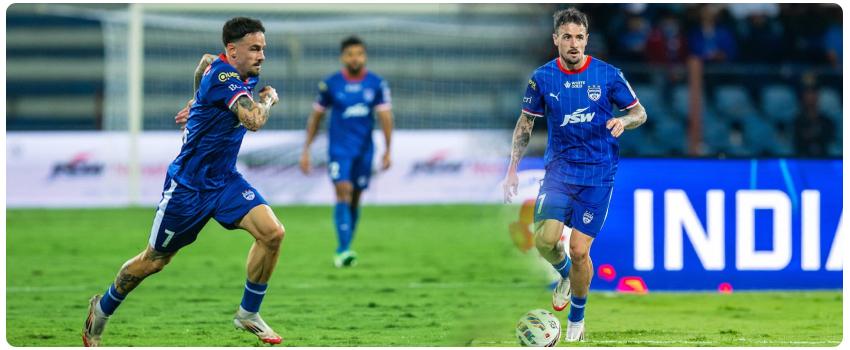
For Indian football fans weary of “what if” debates, this is the concrete news you’ve been waiting for. On November 20, 2025, the All India Football Federation (AIFF) confirmed that FIFA had formally approved Ryan Williams change of association. This green light comes after he successfully renounced his Australian citizenship to acquire an Indian passport. On November 15, he was officially named in India’s 23-man squad and traveled to Dhaka, but missed the matchday list because Football Australia’s NOC and FIFA’s final clearance arrived after the registration deadline.
While his twin brother Aryn and older brother Rhys have forged their own paths in football, Ryan is the one who has taken the irreversible step of changing nationality to represent the country of his mother’s heritage.


What the rules actually say
There is often confusion among fans about why we don’t see more diaspora players in the national jersey. The answer lies in the law, not just sports policy. The Constitution of India does not permit dual citizenship. A person cannot hold an Indian passport while simultaneously holding a passport from another country, such as Australia or the UK.
This is where the distinction between an Overseas Citizen of India (OCI) card and full citizenship becomes critical. An OCI card functions as a lifelong visa for travel and residency, but it is not a passport. The Ministry of Youth Affairs and Sports’ policy (specifically the circular from December 2008) mandates that to represent India in international sports, an athlete must be a citizen – meaning they must hold a valid Indian passport.
FIFA’s own regulations on “Change of Association” are equally strict. FIFA bases eligibility on nationality; practically, teams require a valid passport as proof before they can register a player. Williams had to navigate this double hurdle: first, legally surrendering his Australian citizenship to become an Indian national, and second, proving to FIFA that he had never played a competitive senior match for his former nation.
India’s current on-field problem, in one uncomfortable chart
If you’re wondering why the urgency for Williams is so high, look no further than the scoreboard in Dhaka. On November 18, 2025, India lost 1-0 in Dhaka, with Shekh Morsalin scoring in the 12th minute in the AFC Asian Cup 2027 qualifiers. It wasn’t just a loss; it was a reality check against a neighbor that, until recently, India was expected to beat comfortably.
That defeat triggered an immediate slide in the rankings. On November 20, 2025, India fell to FIFA Rank 142, a position that reflects a tough calendar year.
Since head coach Khalid Jamil took the reins on August 1, 2025 – becoming the first Indian permanent head coach in 13 years – the team has struggled for rhythm. The loss in Dhaka highlighted a familiar ailment: a lack of bite in the final third. We held possession but couldn’t convert territory into goals. This slump isn’t on one man, but it paints a stark picture of a team needing a spark, and fast.
Can one winger move the needle? What Ryan brings
Here is the commentary bit: don’t expect Superman, but do expect a professional who raises the floor. Ryan Williams isn’t a magic wand, but he is a different profile of player than what is currently in the pool.
Having watched him at Bengaluru FC since 2023, and previously in the English leagues with Portsmouth and Oxford United, his value is clear. He brings tempo. In the ISL, the game can sometimes drift; Williams typically plays with a directness and urgency that unsettles defenders. He presses intelligently – a trait honed in England – and has the physical capacity to track back, which is non-negotiable in Jamil’s system.
Crucially, his international eligibility for Australia was tied to a single senior appearance: a friendly against South Korea in 2019. Because it wasn’t a competitive fixture (like a World Cup or Asian Cup qualifier), the door to India remained open. He joined the national camp in Bengaluru earlier this month and traveled to Dhaka, but had to watch the match from the sidelines while awaiting the final paperwork. That paperwork is now done.
Lessons from other nations that embraced diaspora talent
If you think bringing in one or two diaspora players is a novelty, look at the global map. It is a standard survival strategy for modern football nations.
Take Morocco. At the 2022 World Cup in Qatar, they reached the semi-finals with a squad where 14 of the 26 players were born outside Morocco. They didn’t just “add” players; they integrated talent from Dutch, Spanish, and French academies into a cohesive unit.
Closer to India’s ranking tier, look at Cape Verde. A nation of roughly 600,000 people qualified for the 2026 World Cup – a historic first – by leaning entirely on a global dragnet of talent. They beat Eswatini 3-0 in October 2025 to seal that spot. Even our neighbors are moving; Bangladesh fielded Hamza Choudhury (formerly of Leicester City) in 2025, and his debut against India in March showed exactly the kind of composure top-tier experience brings to a derby.
The lesson? Diaspora talent transfers high-level habits to the national setup. It forces local players to compete harder for spots and raises the training ground intensity.
The bigger fixes India can’t avoid
However, let’s not kid ourselves. Ryan Williams can run the flank, but he can’t fix the grassroots pipeline. If we treat him as a savior, we repeat the mistakes of the past.
The structural priorities remain screamingly obvious: we need a coherent scouting network that doesn’t miss domestic talent, a longer youth calendar, and better sports science support to prevent the injuries plaguing our key starters. Coach Jamil needs time to instill a philosophy, but he also needs players who are match-fit and tactically flexible.
Diaspora players are a powerful supplement, not a meal replacement. They can plug immediate gaps – like the one on the right wing – giving the domestic system time to catch up. The Williams approval is a win, undoubtedly. But unless it’s paired with the hard, boring work of youth development, we’ll be having this same conversation when the next “savior” applies for a passport.
Key Facts & Dates
- Ryan Williams: FIFA change-of-association approved Nov 19, 2025; AIFF announced Nov 20, 2025; plays for Bengaluru FC.
- India’s recent result: Lost 1-0 to Bangladesh in Dhaka on Nov 18, 2025 (AFC Asian Cup qualifiers).
- FIFA Ranking: India fell to 142 on Nov 20, 2025.
- Head Coach: Khalid Jamil, appointed Aug 1, 2025 (first Indian permanent head coach since 2012).
- Eligibility Rule: India prohibits dual citizenship. OCI cards are not valid for representing national teams; players must acquire an Indian passport.
Also Read: Russia Plans Parallel Tournament To The 2026 World Cup For Unqualified Nations: reports
Frequently Asked Questions
Is Ryan Williams eligible to play competitive matches for India?
Yes. As of November 19, 2025, FIFA has approved his change of association. He holds an Indian passport and is available for selection in all future FIFA and AFC competitive fixtures.
Why can’t OCI card holders play for India?
An OCI (Overseas Citizen of India) card is a long-term residency visa, not citizenship. The Government of India’s policy (since 2008) and FIFA regulations both require an athlete to hold a valid passport of the country they represent. OCI holders do not have Indian passports.
Who is Ryan Williams’ brother?
Ryan has two brothers who are footballers. His twin, Aryn Williams, has played in India for NEROCA. His older brother, Rhys Williams, is a retired defender who played for Middlesbrough and earned 14 caps for the Australian national team.
